Emergency Response: Supporting communities affected by recent floods in West Africa
Learn More →Supporting farmers with innovative approaches to improve agricultural productivity and ensure food security across Africa.
Agriculture is the backbone of Africa economy and central to the Government development strategy. African agriculture sector employs more than 40% of the total population and more than 70% of African rural people. It accounts both directly and indirectly for approximately 53% of African gross domestic product.
A climate constrained world, with constant competition over natural resources, high levels of poverty and hunger, agricultural distress and an expectation to fulfill the growing food demand. All points to the need for Africa to urgently adopt wide scale 'sustainable agricultural and integrated development' practices.
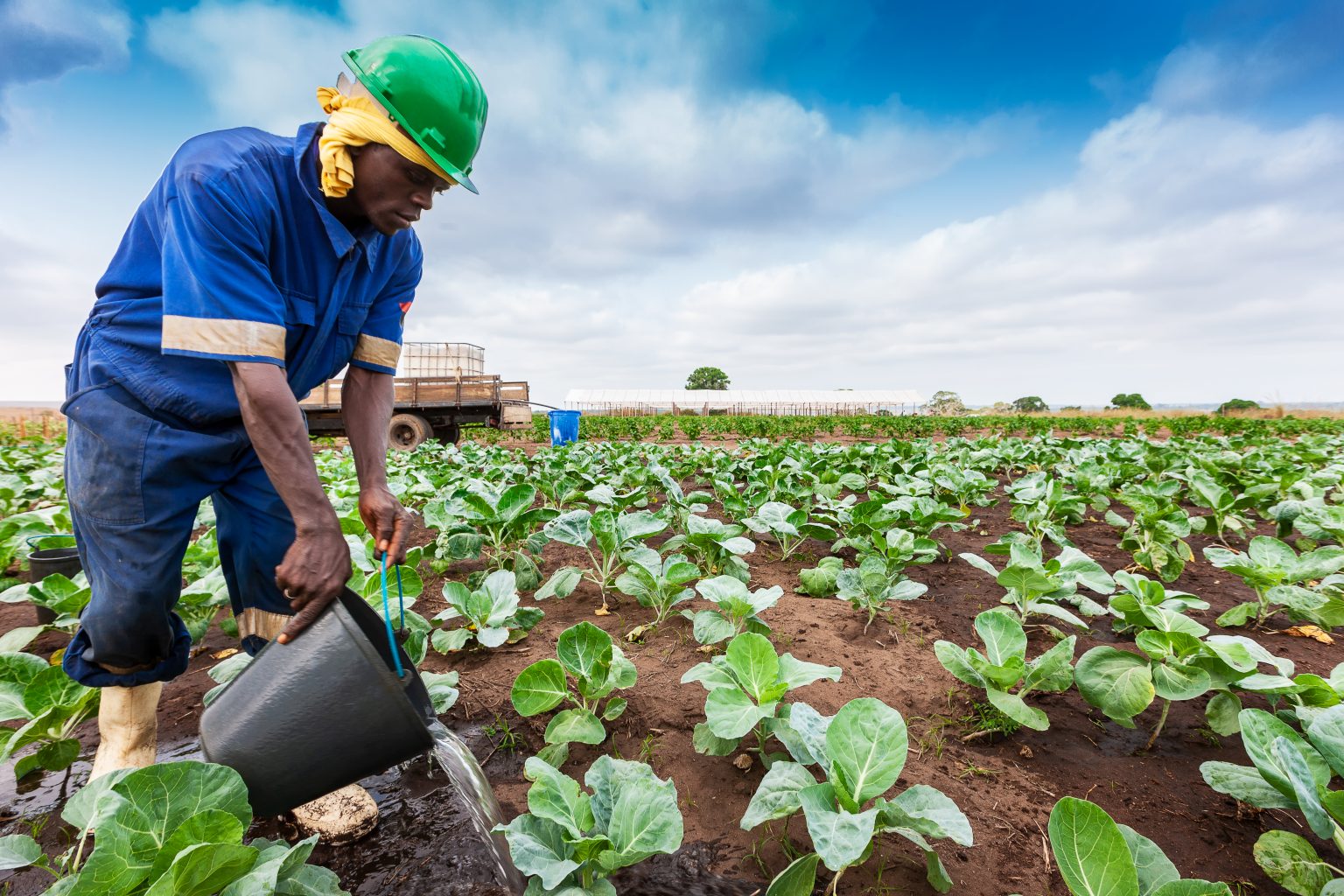
Supporting sustainable practices for improved livelihoods
Agriculture plays a crucial role in Africa's economy and the livelihoods of its people.
How we work with farmers to improve agricultural productivity and sustainability.
Farming is the primary economic activity of most people living in rural villages in Africa, yet many communities are unable to produce enough food. CSDA International contribute sustainable solutions to communities into agricultural issues and help preserve natural resources.
CSDA International works with volunteers to increase agricultural productivity through improved seeds and farming practices, improve access to markets so farmers can profitably sell their surplus food while integrating projects that often combine vegetable gardening, livestock management and nutrition education.
CSDA International responds to these challenges by implementing agriculture and environmental projects together with the vulnerable, rural communities. We strengthen the capacity of rural households, laborers, the landless, and also those communities affected by HIV/AIDS, enabling them to take control of their own development.
We train community members on the best practices in agriculture. We use innovative and participatory methods to create a learning environment, including learning networks. Beneficiaries have the opportunity to learn about particular crop production problems and ways to address them by using their own observations, discussions and participation in practical learning-by-doing field exercises.
Our approach enables farmers to investigate and overcome a wide range of agricultural challenges.

Introducing and promoting drought-resistant crop varieties that can thrive in challenging climate conditions, helping farmers adapt to changing weather patterns.

Teaching sustainable soil management techniques including composting, crop rotation, and natural fertilizers to improve soil health and productivity.

Promoting minimal soil disturbance, permanent soil cover, and crop diversification to conserve biodiversity and natural resources while improving yields.
Our programs are embedded through engagement with rural communities, linking agriculture with various other human development indices.
Our programs are embedded through the engagement with communities of rural areas, and link agriculture with various other human development indices. They are designed to engage the community at large, especially young people, to build resilience and capacities to find long-term solutions to ecological degradation, health, and poverty, and livelihood.
A strengthened agro-processing sector with strong agriculture-industry linkages is one of the key goals of the Government's development agenda. Agro-processing is expected to expand produce markets for farmers, increase value addition for agriculture, and create employment (particularly for the youth) in both agriculture and industry.
The growing segment of middle-income households is expected to generate opportunities for growth in domestic ago-processing as well as add value to agricultural products and offer opportunities for increased employment.
Attention will continue to be given to social inclusiveness and to the development of gender-sensitive programmes that focus not only on addressing inequalities, but also to secure and build assets in ways that empower the most vulnerable.
Focus will also be placed on promoting policy and institutional change and stimulating nutrition-sensitive investments in the food system and across those sectors that are important for food security and nutrition (such as crop, livestock, forestry, fisheries and aquaculture, social protection, health and education).
Efforts towards leveraging value chain finance for strengthened, increased and more effective agricultural financing will be pursued in collaboration with relevant institutions.
Your support can help us bring sustainable agricultural practices to more communities across Africa. Together, we can improve food security and create resilient livelihoods.